Tarot Card Symbolism: A deeper dive into the Hidden Meanings
Evelynn Road

The Tarot deck, a collection of 78 cards adorned with captivating imagery, has long intrigued and fascinated seekers of wisdom and insight. Yet beyond their aesthetic appeal, Tarot cards are rich vessels of symbolism, each image holding layers of meaning.
Lets take deep dive into the intricate world of Tarot card symbolism. Beyond mere cards, the Tarot is a complex system of symbols that speaks to the human condition, offering insights into our deepest fears, desires, and aspirations.
In this article, we strip away the mystique surrounding the Tarot and delve straight into its symbolic language. From the archetypal figures of the Major Arcana to the everyday scenes of the Minor Arcana, each card serves as a doorway to profound understanding and self-reflection.
Its fascinating to explore the rich tapestry of symbols woven throughout the Tarot, shedding light on its timeless wisdom and practical applications. Whether you're a seasoned practitioner or a curious novice, prepare to unlock the secrets of the Tarot and tap into its transformative power.
Numbers: Numbers play a fundamental role in Tarot symbolism, representing cycles, patterns, and stages of development. Each number carries its own unique energy and symbolism, influencing the interpretation of the card it appears on. For example, the number one signifies new beginnings, potential, and individuality, as seen in The Magician card, while the number ten represents completion, fulfillment, and the end of a cycle, as depicted in The Wheel of Fortune.
Colours: Colours evoke emotions, moods, and states of consciousness in Tarot readings, adding depth and nuance to the interpretation of each card. The vibrant hues of the cards speak volumes, conveying themes of passion, creativity, wisdom, and transformation. For instance, the fiery reds and oranges of the Wands suit symbolize action, passion, and creativity, while the cool blues and greens of the Cups suit evoke feelings of emotion, intuition, and spirituality.
Animals: Animals embody instinctual energies and primal forces in Tarot symbolism, serving as messengers and guides on the journey of self-discovery. Each animal carries its own symbolic meaning, reflecting aspects of human nature and the natural world. For example, the lion in the Strength card represents courage, inner strength, and the ability to overcome challenges, while the dove in the Ace of Cups symbolizes peace, harmony, and spiritual love.
Elements: The four elements—fire, water, air, and earth—are foundational symbols in Tarot, representing aspects of the human experience and the natural world. Each element carries its own unique energy and symbolism, influencing the interpretation of the cards it appears on. Fire symbolizes passion, creativity, and transformation, as seen in the fiery imagery of the Wands suit, while water represents emotion, intuition, and spirituality, as depicted in the flowing imagery of the Cups suit.
Major Arcana
0. The Fool: The Fool stands at the edge of a cliff, symbolizing new beginnings and a leap of faith. He carries a small bag representing the experiences he will gather on his journey. A white rose symbolizes purity and innocence, while a small dog represents loyalty and instinct.
1. The Magician: The Magician stands before a table adorned with the symbols of the four elements: a wand, a cup, a sword, and a pentacle. These represent the tools at his disposal for manifestation and creation. The infinity symbol above his head signifies infinite potential, while the lemniscate at his waist symbolizes the cyclical nature of existence.
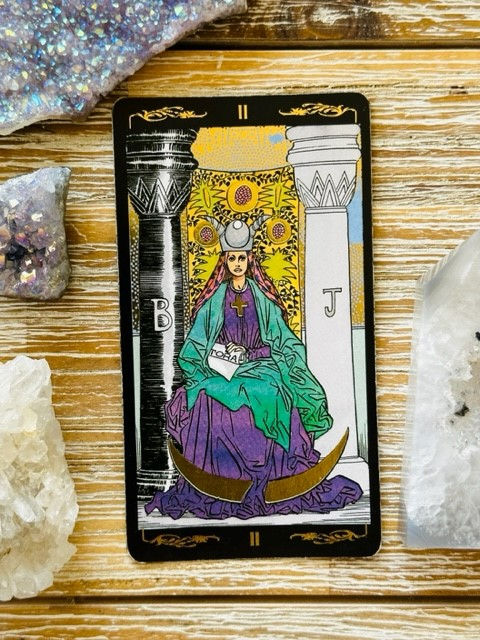
2. The High Priestess: The High Priestess sits between two pillars, representing the duality of nature and the balance of opposites. She holds a scroll representing hidden knowledge and intuition, while the crescent moon at her feet symbolizes the subconscious mind. The pomegranates on her robe represent fertility and abundance.
3. The Empress: The Empress sits on a throne surrounded by lush vegetation, symbolizing fertility, growth, and abundance. She holds a sceptre representing authority and power, while her crown is adorned with twelve stars representing the zodiac. The shield with the symbol of Venus represents love and feminine energy.
4. The Emperor: The Emperor sits on a stone throne adorned with ram heads, symbolizing authority, stability, and control. He holds an ankh representing life and vitality, while his armour signifies protection and strength. The barren mountains in the background represent stability and security.
5. The Hierophant: The Hierophant sits between two pillars, representing tradition and spiritual authority. He wears elaborate robes adorned with religious symbols, symbolizing his role as a spiritual teacher and guide. The crossed keys at his feet represent hidden knowledge and the keys to unlocking spiritual wisdom.
6. The Lovers: The Lovers stand beneath a blessing angel, symbolizing divine guidance and protection. The man and woman are naked, representing innocence and vulnerability. The tree behind them bears fruit, symbolizing fertility and abundance. The serpent wrapped around the tree symbolizes temptation and the duality of human nature.
7. The Chariot: The Chariot is pulled by two sphinxes, one black and one white, symbolizing the balance of opposing forces. The charioteer holds a wand representing willpower and determination, while the canopy above his head symbolizes victory and protection. The stars on his armour represent cosmic guidance and divine intervention.
8. Strength: Strength shows a woman gently closing the mouth of a lion, symbolizing inner strength, courage, and compassion. She wears a white robe representing purity and innocence, while the infinity symbol above her head signifies infinite potential. The lemniscate on her crown symbolizes the eternal cycle of life and death.
9. The Hermit: The Hermit stands alone on a mountain peak, symbolizing introspection, solitude, and inner guidance. He holds a lantern representing inner wisdom and enlightenment, while his staff signifies authority and spiritual power. The star in the lantern represents divine inspiration and guidance.
10. Wheel of Fortune: The Wheel of Fortune depicts a large wheel with various creatures riding on it, symbolizing the cyclical nature of life and destiny. Four figures representing the four fixed signs of the zodiac - Aquarius, Scorpio, Leo, and Taurus - are depicted in each corner, symbolizing stability and balance. The serpent at the top of the wheel symbolizes the cycle of life, death, and rebirth.
11. Justice: Justice holds a sword representing truth and clarity, while the scales symbolize balance and impartiality. She wears a blindfold representing impartial judgment and fairness. The double-edged sword signifies the power of discernment and the consequences of one's actions.
12. The Hanged Man: The Hanged Man hangs upside down from a tree, symbolizing surrender, sacrifice, and letting go. His posture forms an inverted triangle, representing spiritual awakening and enlightenment. The halo around his head symbolizes divine wisdom and enlightenment, while his serene expression signifies acceptance and inner peace.
13. Death: Death rides a pale horse, symbolizing transformation, endings, and new beginnings. The sun sets in the background, symbolizing the end of one cycle and the beginning of another. The figures in the foreground represent people from different walks of life, symbolizing the universality of death and rebirth. The river symbolizes the river of life and the passage to the unknown.
14. Temperance: Temperance stands with one foot on land and one in water, symbolizing balance, harmony, and moderation. She pours water between two cups, representing the harmonization of opposites and the blending of elements. The angel's wings symbolize divine guidance and protection, while the crown represents spiritual attainment and enlightenment.
15. The Devil: The Devil stands on a pedestal, representing materialism, bondage, and attachment to the physical world. Chains bind two figures, symbolizing enslavement to the ego and worldly desires. The torches represent enlightenment and awareness, while the inverted pentagram symbolizes the descent into darkness and ignorance.
16. The Tower: The Tower depicts a tower being struck by lightning, symbolizing sudden change, upheaval, and destruction. Figures fall from the tower, symbolizing the collapse of false structures and beliefs. The crown at the top of the tower represents the ego, which is destroyed to make way for spiritual renewal and transformation.
17. The Star: The Star depicts a naked woman pouring water into a pool and onto the land, symbolizing renewal, hope, and inspiration. Seven stars shine overhead, representing the seven chakras and the interconnectedness of the spiritual and physical realms. The woman's posture represents openness and receptivity to divine guidance and intuition.
18. The Moon: The Moon shines in the night sky, symbolizing intuition, mystery, and the subconscious mind. Two towers stand on either side of the moon, representing the conscious and unconscious minds. A crayfish emerges from the water, symbolizing the emergence of hidden truths and emotions from the depths of the subconscious.
19. The Sun: The Sun radiates warmth and light, symbolizing joy, vitality, and enlightenment. A child rides a white horse, symbolizing innocence, purity, and new beginnings. Sunflowers bloom in the background, representing growth, abundance, and vitality. The sunflowers also symbolize the four elements and the four suits of the Tarot.
20. Judgement: Judgement depicts an angel blowing a trumpet, symbolizing awakening, rebirth, and spiritual calling. Figures emerge from coffins, symbolizing resurrection and new beginnings. The mountains in the background represent obstacles overcome, while the water symbolizes emotional purification and renewal.
21. The World: The World shows a figure surrounded by a wreath, symbolizing completion, fulfillment, and unity. Four figures representing the four fixed signs of the zodiac are depicted in the corners, symbolizing balance and harmony. The figure holds two wands, symbolizing mastery and accomplishment, while dancing in a ring represents the cyclical nature of existence.
Minor Arcana
The Minor Arcana consists of four suits - Cups, Pentacles, Swords, and Wands - each representing different aspects of human experience and consciousness.
Cups (Water): The Cups suit represents emotions, intuition, and the subconscious mind. Each cup depicts a scene or symbol related to love, relationships, and emotional fulfillment. The suit reflects the ebb and flow of feelings, from joy and contentment to sorrow and longing.
Pentacles (Earth): The Pentacles suit represents material concerns, practicality, and the physical world. Each pentacle depicts a scene or symbol related to wealth, health, and material abundance. The suit reflects issues related to work, finances, and the physical environment.
Swords (Air): The Swords suit represents intellect, communication, and mental clarity. Each sword depicts a scene or symbol related to conflict, truth, and mental challenges. The suit reflects the power of thoughts, beliefs, and words to shape our reality.
Wands (Fire): The Wands suit represents creativity, passion, and inspiration. Each wand depicts a scene or symbol related to action, ambition, and growth. The suit reflects the drive to pursue our goals, overcome obstacles, and manifest our desires.
Each card within the Minor Arcana carries its own unique symbolism and imagery, reflecting the themes and lessons associated with its suit. By understanding the symbols and themes represented in each card, readers can gain deeper insights into the dynamics of human experience and consciousness as depicted in the Tarot.
Cups (Water)
The Cups address the complexities of human emotions, relationships, and spiritual growth.
Ace of Cups: The Ace of Cups depicts a hand emerging from a cloud, holding a golden chalice overflowing with water. From the cup emerges a dove, carrying a host of symbols including a cross, representing divine love and spiritual blessings. The water flowing from the cup represents the abundance of emotions, intuition, and creativity. This card symbolizes new beginnings, emotional fulfillment, and spiritual awakening.
Two of Cups: The Two of Cups shows a man and a woman facing each other, each holding a cup and raising it in a toast. The caduceus, intertwined around the two cups, represents harmony, balance, and healing in relationships. The lion's head, depicted on the handle of the cup, symbolizes strength, courage, and passion. This card signifies partnership, mutual attraction, and emotional connection.
Three of Cups: The Three of Cups depicts three women dancing in a circle, raising their cups in celebration. The abundance of fruit and flowers surrounding them symbolizes fertility, abundance, and joy. The women's hands joined together represent unity, friendship, and sisterhood. This card signifies rejoicing, social gatherings, and emotional fulfillment shared with loved ones.
Four of Cups: The Four of Cups shows a figure sitting under a tree, seemingly disinterested in the cup being offered to them by a hand emerging from a cloud. Three cups are placed before the figure, while a fourth cup is being presented. The figure's posture suggests introspection, contemplation, and discontentment. This card symbolizes apathy, dissatisfaction, and missed opportunities.
Five of Cups: The Five of Cups depicts a figure standing before three spilled cups, mourning their loss, while two cups remain standing behind them. The bridge over troubled waters symbolizes the path to emotional healing and renewal. The figure's focus on what has been lost represents regret, sorrow, and disappointment. This card urges the querent to find solace in what remains rather than dwelling on past losses.
Six of Cups: The Six of Cups shows a young child offering a cup filled with flowers to another child. The older child gazes at the younger one with a sense of nostalgia and innocence. The cups filled with flowers symbolize happy memories, innocence, and childhood joys. The castle in the background represents security, stability, and the safety of home. This card signifies nostalgia, innocence, and the return of past influences.
Seven of Cups: The Seven of Cups depicts a figure surrounded by seven cups, each containing a different symbol or fantasy. These symbols range from a castle in the clouds to a snake emerging from a cup, representing various desires, fantasies, and illusions. The figure's indecision and confusion suggest the need for discernment and clarity amidst a sea of possibilities. This card warns against being seduced by illusion and advises the querent to focus on what truly matters.
Eight of Cups: The Eight of Cups shows a figure walking away from a row of cups towards a distant mountain. The figure's posture indicates determination, resolve, and a sense of purpose. The cups left behind represent emotional attachments, while the mountain symbolizes the quest for higher meaning and fulfillment. This card symbolizes abandonment, withdrawal, and the pursuit of spiritual growth.
Nine of Cups: The Nine of Cups, often called the "wish card," depicts a figure seated with their arms crossed, surrounded by nine cups arranged in a rainbow pattern. The figure's contented expression suggests satisfaction, fulfillment, and emotional well-being. The cups symbolize abundance, happiness, and wish fulfillment. This card signifies emotional contentment, gratitude, and the realization of the querent's deepest desires.
Ten of Cups: The Ten of Cups shows a happy family scene with a rainbow arching overhead, symbolizing harmony, happiness, and domestic bliss. The family members join hands, celebrating their unity and emotional connection. The rainbow represents divine blessings and the fulfillment of the querent's hopes and dreams. This card signifies emotional fulfillment, harmony in relationships, and the attainment of lasting happiness.
Page of Cups: The Page of Cups depicts a young person holding a cup with a fish emerging from it. The fish symbolizes intuition, creativity, and the unconscious mind. The figure's dreamy expression suggests sensitivity, imagination, and emotional depth. This card signifies the emergence of psychic gifts, artistic inspiration, and the exploration of the inner world.
Knight of Cups: The Knight of Cups shows a knight riding on a white horse, holding a cup adorned with a fish. The knight's romantic demeanour and poetic nature suggest idealism, charm, and emotional depth. The horse symbolizes movement, adventure, and the pursuit of dreams. This card signifies romantic gestures, imaginative pursuits, and the pursuit of emotional fulfillment.
Queen of Cups: The Queen of Cups depicts a compassionate and nurturing figure seated on a throne, holding a cup adorned with a lid shaped like a lotus flower. The cup symbolizes emotional receptivity, intuition, and compassion. The queen's serene expression suggests empathy, understanding, and psychic abilities. This card signifies emotional maturity, intuitive wisdom, and unconditional love.
King of Cups: The King of Cups shows a regal figure seated on a throne, holding a cup adorned with a fish. The fish symbolizes intuition, creativity, and the depths of the unconscious mind. The king's calm demeanour and compassionate nature suggest emotional stability, wisdom, and empathy. This card signifies emotional mastery, balanced leadership, and the ability to navigate the depths of the psyche.
Pentacles (Earth)
The Pentacles deal with the complexities of material wealth, earthly manifestations, and practical endeavours.
Ace of Pentacles: The Ace of Pentacles depicts a hand emerging from a cloud, offering a golden pentacle surrounded by lush foliage. The pentacle symbolizes material abundance, prosperity, and earthly manifestation. The fertile landscape represents the potential for growth, stability, and practical achievements. This card signifies new opportunities, financial prosperity, and the manifestation of goals and aspirations.
Two of Pentacles: The Two of Pentacles shows a figure balancing two pentacles against a backdrop of turbulent waters. The figure's adeptness at juggling suggests adaptability, flexibility, and the ability to multitask. The infinity symbol above their head represents the cyclical nature of life and the need for balance amidst change. This card symbolizes balance, harmony, and the management of competing priorities.
Three of Pentacles: The Three of Pentacles depicts a figure working diligently on a stone carving in the presence of two others, who admire and offer feedback on their work. The architectural plans symbolize careful planning, attention to detail, and craftsmanship. The figure's mastery of their craft represents skill, expertise, and the pursuit of excellence. This card signifies collaboration, teamwork, and the successful completion of projects.
Four of Pentacles: The Four of Pentacles shows a figure holding onto four pentacles tightly, with a look of possessiveness and fear. The figure's closed posture suggests a reluctance to let go of material possessions or a fear of loss. The pentacles symbolize material security, stability, and financial success. This card warns against excessive attachment to material wealth and advises the querent to cultivate a sense of generosity and abundance.
Five of Pentacles: The Five of Pentacles depicts two figures walking in the snow, seemingly destitute and in need of assistance. The stained glass window in the background represents the warmth and security of the nearby church, symbolizing hope and spiritual refuge. The figures' tattered clothing and bare feet suggest poverty, hardship, and isolation. This card signifies financial struggle, adversity, and the need for support and resilience.
Six of Pentacles: The Six of Pentacles shows a figure distributing coins to two others, symbolizing generosity, charity, and philanthropy. The scales in the figure's other hand represent balance, fairness, and impartiality in the distribution of resources. The beggar's posture suggests gratitude, humility, and the acceptance of help when needed. This card signifies generosity, abundance, and the flow of resources.
Seven of Pentacles: The Seven of Pentacles depicts a figure standing in a vineyard, surveying the fruits of their labour with a sense of contemplation and assessment. The pentacles hanging from the vine represent abundance, growth, and the rewards of patience and perseverance. The figure's posture suggests reflection, evaluation, and the anticipation of future harvests. This card signifies investment, long-term planning, and the need for patience and delayed gratification.
Eight of Pentacles: The Eight of Pentacles shows a figure diligently working on a pentacle, honing their craft with precision and dedication. The repetitive nature of the task suggests skill-building, craftsmanship, and the pursuit of mastery. The figure's focus and attention to detail represent commitment, discipline, and the pursuit of excellence. This card signifies diligence, skill development, and the mastery of one's craft.
Nine of Pentacles: The Nine of Pentacles depicts a figure standing in a lush garden, surrounded by abundance and luxury. The falcon perched on their arm symbolizes freedom, independence, and self-reliance. The grapes hanging from the vine represent prosperity, wealth, and the rewards of hard work. This card signifies financial independence, self-sufficiency, and the enjoyment of life's luxuries.
Ten of Pentacles: The Ten of Pentacles shows a wealthy family gathered in front of their ancestral home, surrounded by symbols of prosperity and abundance. The elder figure holds a staff adorned with a pentacle, representing the family's legacy and the continuity of wealth and tradition. The architecture of the building symbolizes stability, security, and the fulfillment of material desires. This card signifies financial security, inheritance, and the fulfillment of long-held aspirations.
Page of Pentacles: The Page of Pentacles depicts a young person holding a pentacle, gazing at it with a sense of curiosity and focus. The figure's studious demeanour suggests a desire for knowledge, practical skills, and financial stability. The fertile landscape in the background represents the potential for growth, abundance, and material success. This card signifies a new venture, opportunity for learning, and the pursuit of practical goals.
Knight of Pentacles: The Knight of Pentacles shows a knight riding on a dark horse, holding a pentacle with a steady and cautious demeanour. The knight's practical nature and methodical approach suggest reliability, responsibility, and a commitment to hard work. The ploughed field symbolizes fertility, productivity, and the steady progress achieved through perseverance. This card signifies dedication, diligence, and the pursuit of long-term goals.
Queen of Pentacles: The Queen of Pentacles depicts a nurturing figure seated on a throne, surrounded by symbols of abundance and fertility. The pentacle in her lap represents material wealth, practicality, and financial security. The lush landscape and blooming flowers symbolize prosperity, growth, and the nurturing of resources. This card signifies practicality, nurturing, and the ability to create abundance and stability.
King of Pentacles: The King of Pentacles shows a regal figure seated on a throne, holding a sceptre adorned with a pentacle. The castle in the background represents material wealth, stability, and success. The king's grounded demeanour and practical wisdom suggest financial acumen, reliability, and the ability to manifest abundance. This card signifies mastery over the material world, financial security, and the attainment of material goals.
Wands (Fire)
The suit of wands offers us insights into matters of creativity, passion, and action.
Ace of Wands: The Ace of Wands depicts a hand emerging from a cloud, holding a wand with new growth sprouting from it, symbolizing inspiration, potential, and creative energy. The hand represents divine intervention or spiritual guidance, while the leaves and blossoms represent growth and vitality. This card signifies new beginnings, creative potential, and the spark of inspiration.
Two of Wands: The Two of Wands shows a figure standing on a hill, holding a globe and gazing into the distance, symbolizing planning, ambition, and future vision. The globe represents opportunity and exploration, while the wand in his other hand represents personal power and initiative. This card signifies foresight, decision-making, and taking the first steps toward a goal or aspiration.
Three of Wands: The Three of Wands depicts a figure overlooking the sea, with three wands planted firmly in the ground, symbolizing foresight, expansion, and opportunity. The ships on the horizon represent potential ventures or journeys, while the figure's posture suggests confidence and anticipation. This card signifies foresight, planning, and the realization of long-term goals.
Four of Wands: The Four of Wands shows a celebratory scene with figures dancing beneath a floral archway, symbolizing joy, harmony, and community. The archway represents stability and security, while the figures' gestures suggest unity and celebration. This card signifies milestones, achievements, and the fulfillment of goals, often associated with weddings, parties, or celebrations.
Five of Wands: The Five of Wands depicts figures engaged in a lively conflict, each wielding a wand, symbolizing competition, conflict, and struggle. The chaotic scene suggests challenges and obstacles, while the wands themselves represent energy, ambition, and personal power. This card signifies competition, disagreement, and the need to assert oneself amidst conflict.
Six of Wands: The Six of Wands shows a figure riding triumphantly on horseback, holding a wand aloft, symbolizing victory, recognition, and public acclaim. The figure's confident posture and the adoring crowd represent success and admiration, while the laurel wreath signifies achievement and honour. This card signifies triumph, recognition, and the fulfillment of goals.
Seven of Wands: The Seven of Wands depicts a figure standing atop a hill, defending his position against six wands aimed at him, symbolizing courage, perseverance, and standing your ground. The figure's elevated position represents resilience and determination, while the opposing wands signify challenges or opposition. This card signifies resilience, defending one's beliefs, and overcoming obstacles through inner strength.
Eight of Wands: The Eight of Wands shows eight wands flying through the air in a diagonal formation, symbolizing swiftness, progress, and forward movement. The wands' trajectory suggests rapid communication or action, while the clear sky represents clarity and freedom from obstacles. This card signifies quick changes, accelerated growth, and the swift resolution of issues or delays.
Nine of Wands: The Nine of Wands depicts a figure standing guard with one wand, while eight wands are planted in the ground behind him, symbolizing resilience, perseverance, and defensiveness. The figure's bandaged head suggests weariness or battle scars, while the defensive posture indicates readiness for further challenges. This card signifies resilience, endurance, and maintaining boundaries in the face of adversity.
Ten of Wands: The Ten of Wands shows a figure laboriously carrying a heavy burden of ten wands, symbolizing responsibility, oppression, and overwhelm. The figure's hunched posture and strained expression suggest the weight of obligations or burdens, while the distant village represents the journey's end or the fulfillment of duties. This card signifies burdens, overwhelm, and the need to delegate or release responsibilities to prevent burnout.
Page of Wands: The Page of Wands depicts a youthful figure holding a wand with new growth sprouting from it, symbolizing enthusiasm, exploration, and potential. The figure's confident posture and colourful attire suggest a spirit of adventure and curiosity, while the desert landscape represents untapped potential and possibility. This card signifies creativity, inspiration, and the pursuit of new opportunities or ventures.
Knight of Wands: The Knight of Wands shows a figure riding on horseback, holding a wand aloft as he charges forward, symbolizing action, adventure, and impulsiveness. The figure's dynamic posture and fiery demeanour suggest a bold and fearless approach to life, while the horse's speed represents swift movement and change. This card signifies energy, ambition, and the pursuit of passions or goals with enthusiasm and determination.
Queen of Wands: The Queen of Wands depicts a regal figure seated on a throne adorned with sunflowers, holding a wand with blossoms at its tip, symbolizing warmth, vitality, and leadership. The figure's confident gaze and welcoming demeanour suggest charisma and magnetism, while the sunflower represents growth, abundance, and radiance. This card signifies confidence, passion, and the ability to inspire others through one's presence and actions.
King of Wands: The King of Wands shows a powerful figure seated on a throne adorned with salamanders, holding a wand with new growth sprouting from it, symbolizing leadership, vision, and entrepreneurship. The figure's commanding presence and fiery energy suggest authority and strength, while the salamanders represent transformation and rebirth. This card signifies confidence, vision, and the ability to manifest one's goals and aspirations with passion and determination.
Swords (Air)
The suit of swords offers us un understanding of the complexities of thought, intellect, and conflict.
Ace of Swords: The Ace of Swords depicts a hand emerging from a cloud, holding a sword aloft with a crown at its tip, symbolizing truth, clarity, and mental clarity. The crown represents victory, authority, and the power of the intellect. The sword cutting through the clouds signifies the ability to cut through confusion and gain insight into the truth. This card signifies mental clarity, breakthroughs, and the attainment of truth.
Two of Swords: The Two of Swords shows a blindfolded figure seated with crossed swords, symbolizing indecision, stalemate, and the need to make a difficult choice. The blindfold represents a lack of clarity or perspective, while the crossed swords suggest a conflict or standoff. The crescent moon in the background represents intuition, inner guidance, and the need to trust one's instincts. This card signifies indecision, avoidance, and the need to confront difficult decisions.
Three of Swords: The Three of Swords depicts a heart pierced by three swords, symbolizing heartbreak, sorrow, and emotional pain. The stormy sky in the background represents turmoil and upheaval, while the raindrops symbolize tears and cleansing. The heart pierced by swords suggests betrayal, loss, and the shattering of illusions. This card signifies emotional pain, grief, and the need to confront painful truths.
Four of Swords: The Four of Swords shows a figure lying on a tomb with three swords hanging above them, symbolizing rest, recovery, and healing. The figure's peaceful repose suggests a period of introspection, contemplation, and recuperation. The stained glass window in the background represents spiritual guidance, illumination, and the promise of renewal. This card signifies rest, recuperation, and the need to retreat and recharge.
Five of Swords: The Five of Swords depicts a figure holding three swords triumphantly, while two figures walk away in defeat, symbolizing conflict, defeat, and betrayal. The figure's smug expression suggests victory at any cost, while the defeated figures represent loss, humiliation, and the aftermath of conflict. The stormy sky in the background represents turmoil and discord. This card signifies conflict, betrayal, and the consequences of unethical behaviour.
Six of Swords: The Six of Swords shows a figure ferrying two others across calm waters in a boat, symbolizing transition, moving on, and leaving behind difficulties. The figure's posture suggests contemplation and introspection, while the calm waters represent emotional stability and peace. The six swords in the boat represent the challenges being left behind, symbolizing a journey towards calmer shores. This card signifies transition, moving on, and the pursuit of peace and stability.
Seven of Swords: The Seven of Swords depicts a figure sneaking away with five swords, leaving two behind, symbolizing deception, betrayal, and deceit. The figure's furtive demeanour suggests dishonesty and manipulation, while the abandoned swords represent loss and abandonment. The camp in the background represents conflict and discord. This card signifies betrayal, deception, and the need to beware of dishonesty and deceit.
Eight of Swords: The Eight of Swords shows a figure bound and blindfolded, surrounded by eight swords, symbolizing restriction, imprisonment, and self-imposed limitations. The figure's posture suggests feelings of helplessness, isolation, and confinement, while the swords represent mental barriers and obstacles. The rocky terrain in the background represents challenges and difficulties. This card signifies self-doubt, fear, and the need to break free from limiting beliefs.
Nine of Swords: The Nine of Swords depicts a figure sitting up in bed, head in hands, surrounded by nine swords hanging on the wall, symbolizing anxiety, fear, and worry. The figure's posture suggests distress and insomnia, while the swords represent mental anguish and torment. The nightmare imagery in the background represents irrational fears and negative thoughts. This card signifies anxiety, nightmares, and the need to confront inner demons.
Ten of Swords: The Ten of Swords shows a figure lying face down with ten swords piercing their back, symbolizing betrayal, defeat, and rock bottom. The figure's posture suggests surrender and acceptance, while the swords represent betrayal and the culmination of painful endings. The sunrise in the background represents hope, renewal, and the promise of a new beginning. This card signifies betrayal, loss, and the need to release what no longer serves.
Page of Swords: The Page of Swords depicts a young person holding a sword aloft, ready to take on the world with courage and determination. The figure's curious expression and open stance suggest a thirst for knowledge and new experiences. The windblown trees in the background represent change, movement, and the power of the mind. This card signifies intellectual curiosity, communication, and the pursuit of truth.
Knight of Swords: The Knight of Swords shows a knight charging forward on horseback, sword raised, symbolizing action, ambition, and determination. The knight's focused expression and swift movement suggest a sense of urgency and drive, while the windblown clouds represent change and movement. This card signifies determination, ambition, and the pursuit of intellectual or ideological goals.
Queen of Swords: The Queen of Swords shows a regal figure seated with a sword in hand, symbolizing clarity, intellect, and independence. The figure's direct gaze and composed demeanour suggest inner strength and wisdom, while the butterflies in the background represent transformation and the power of the mind. This card signifies mental clarity, objectivity, and the ability to cut through illusions.
King of Swords: The King of Swords depicts a wise figure seated on a throne, holding a sword aloft with a calm and composed expression on his face. The birds in the background represent communication, intellect, and mental clarity. The king's authoritative demeanour and strategic thinking suggest mastery over his domain and the ability to make tough decisions. This card signifies intellect, logic, and the pursuit of truth and justice.
In the intricate world of Tarot, symbols and motifs are the building blocks of meaning, each carrying layers of significance that enrich the reading experience. From the subtle hues of colours to the primal energies of animals, Tarot cards are imbued with a diverse array of symbols that speak to the depths of the human psyche.
In Tarot readings, the interpretation of symbols and motifs is highly subjective, influenced by the intuition and personal experiences of the reader. By exploring the rich symbolism of numbers, colours, animals, and elements, practitioners can unlock deeper layers of meaning within the cards and gain insight into the underlying themes of their readings.
The symbolism found within the Tarot serves as a gateway to profound insights, self-discovery, and spiritual growth. Each symbol, whether it be a colour, element, or archetype, carries layers of meaning that resonate deeply with the human experience. Through the study and contemplation of these symbols, individuals can unlock the mysteries of their own psyche, gain clarity in navigating life's challenges, and connect with universal truths that span across cultures and time. The Tarot becomes not just a divinatory tool, but a mirror reflecting the intricacies of the soul and a guide illuminating the path to higher understanding.
Once you have a foundational understanding of Tarot symbolism, pay attention to the symbols that resonate with you in each reading. Trust your intuition to guide you towards the symbols that hold significance for your current situation or question. These symbols act as signposts, offering subtle clues and insights that may not be immediately apparent. By engaging with the symbolism on a personal level and relating it back to real-life events or emotions, you can unlock deeper layers of meaning and gain invaluable insights into your inner world and external circumstances. Trusting your intuition to work in harmony with the symbolism on the cards enhances the richness and depth of your Tarot readings, empowering you to navigate life's journey with clarity, wisdom, and authenticity.